Field Notes Journal
Cacao Coast Classroom: what to expect.
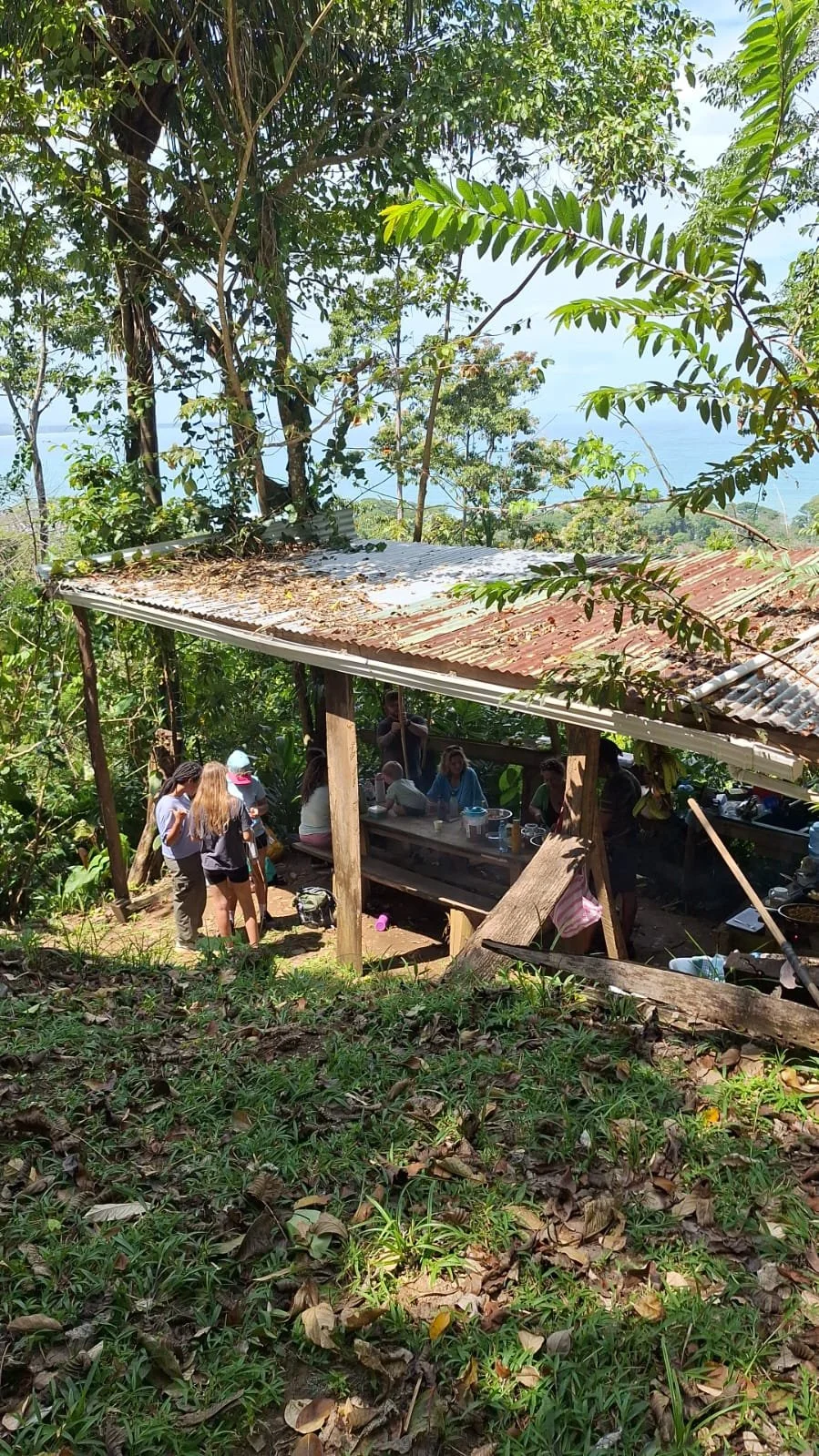
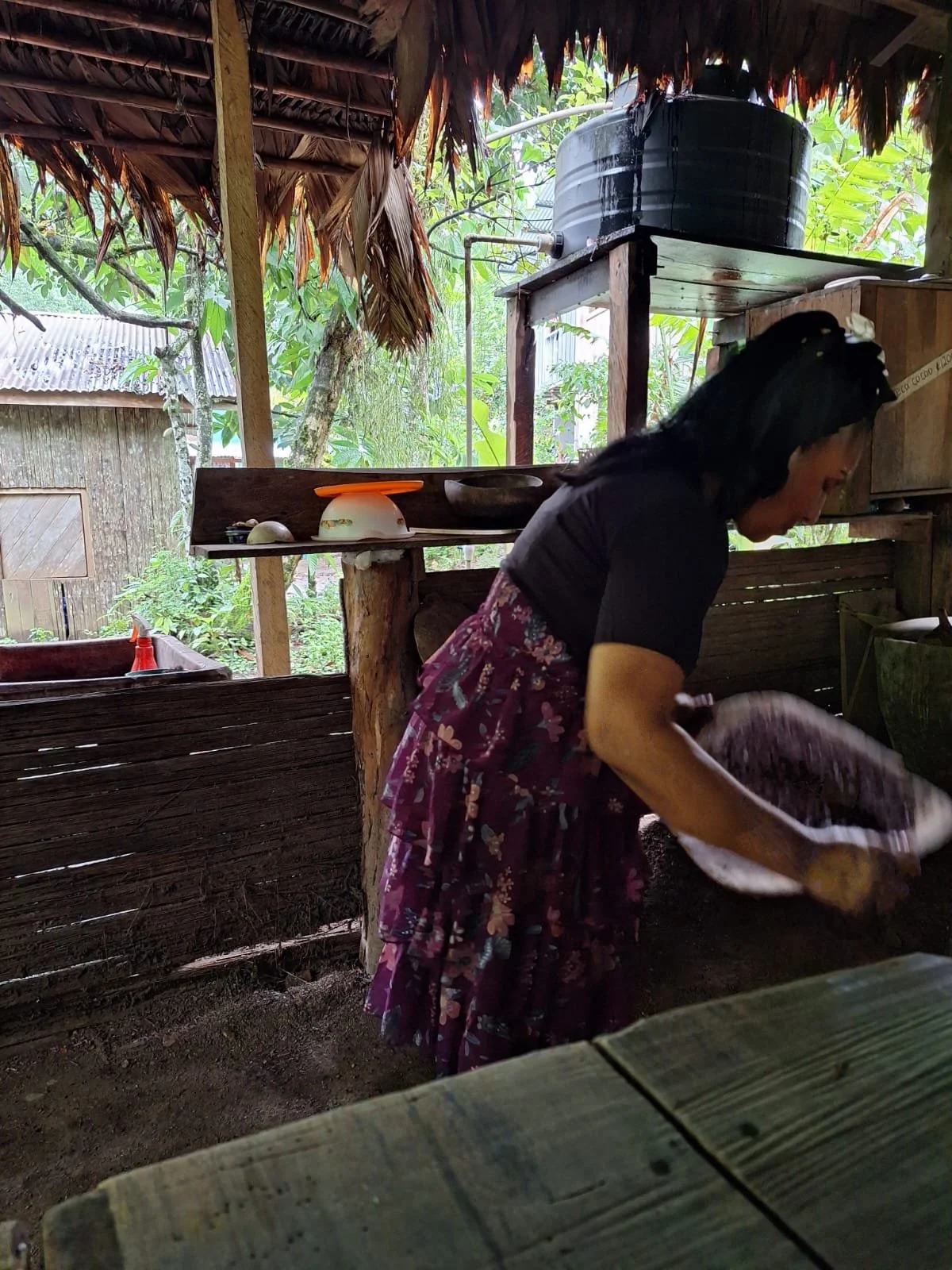
Children learn cacao from tree to bar with Ancel, a specialist who has spent years working with cacao on this coast. They cook with Carling, a local Caribbean woman whose knowledge of traditional recipes and ingredients is not something that can be taught from a book. They work alongside Susanna, who has nearly 40 years on this coastline and leads conservation sessions at sea and on land. They make music with Fede, create art with Andrew, learn about sloth conservation with Olivia from the Sloth Conservation Foundation, and visit the BriBri community with a guide who belongs to it.
What is the difference between a worldschooling hub and an immersive family programme?
What an immersive family programme offers
An immersive programme is built around a specific place, specific people and a specific purpose. The location is not a backdrop. It is the classroom.
In a well-designed immersive programme, the educators are not hired to deliver content. They are people who belong to this place and are choosing to share it. The community relationships are not arranged for visitors. They already exist.
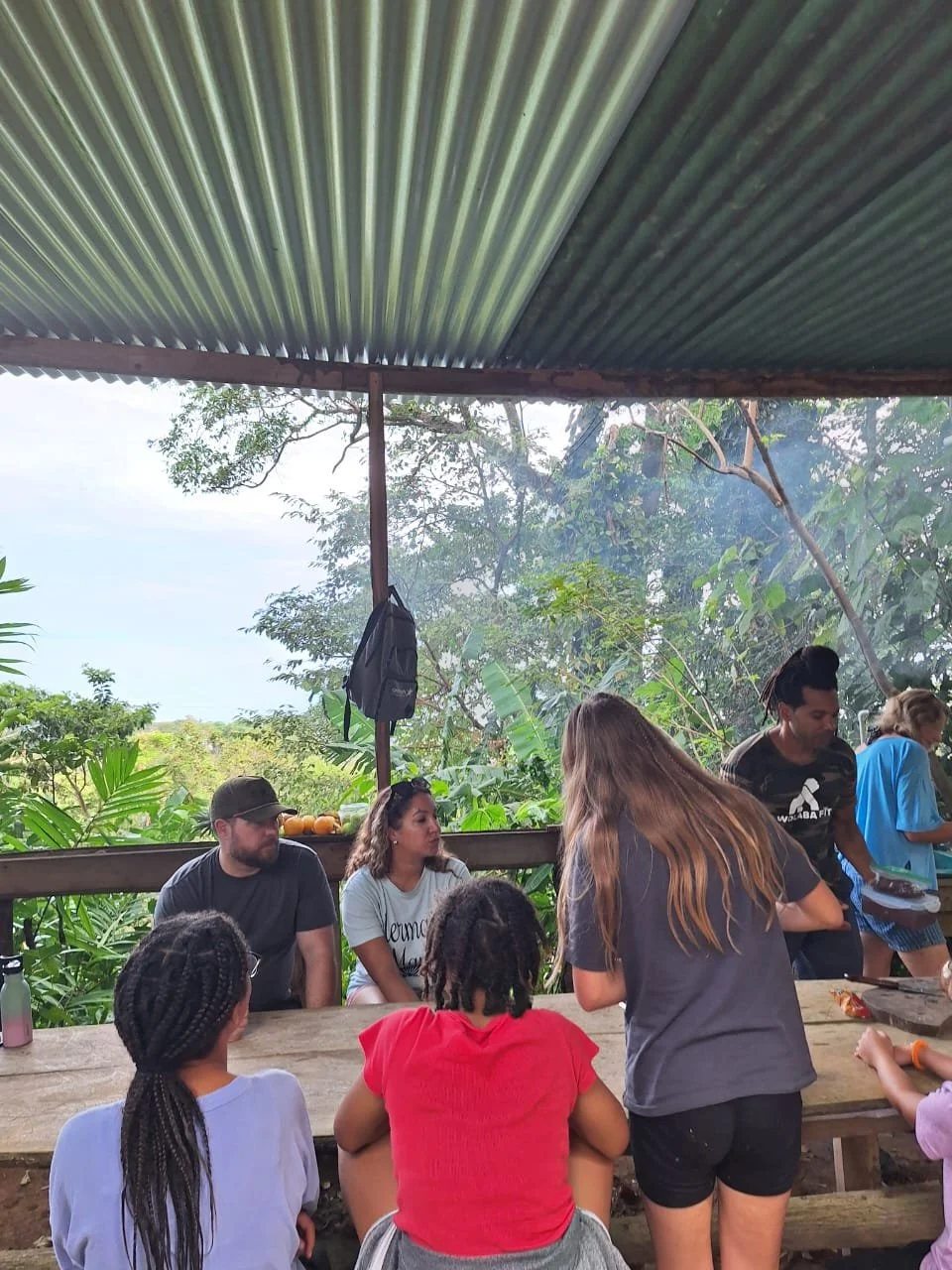
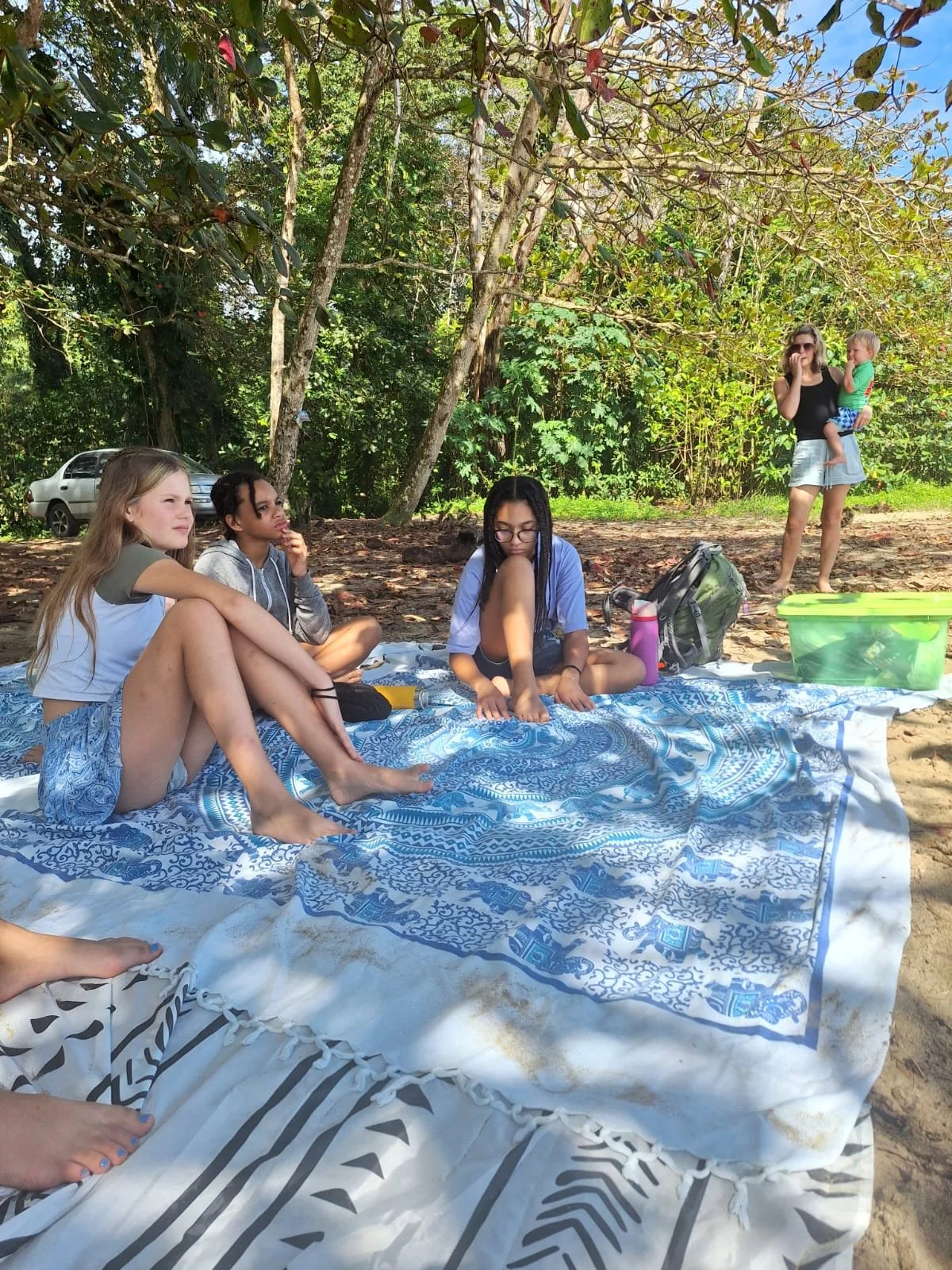
Children do not observe. They participate. They are asked to contribute, to question, to sit with discomfort, to try things that are genuinely new. Something is asked of them, and they rise to it.
Parents in a family immersion programme are present alongside their children, not working in the next room. The experience is shared. That is the point
What Families Who Have Done Everything Find on the Caribbean Coast of Costa Rica
For worldschooling families who have travelled widely and experienced multiple programmes — here is what the Caribbean coast of Costa Rica offers that nothing else does. Culture that cannot be replicated. Depth that takes time to build.
Why the Caribbean coast of Costa Rica is the worldschooling location that other hubs cannot replicate
Why the Caribbean coast of Costa Rica is the worldschooling location that other hubs cannot replicate
Families planning worldschooling in Costa Rica almost always end up on the Pacific side. The volcanoes, the national parks, the well-worn family travel routes. We understand the pull. We also know what they are missing.
Costa Rica is one of the most searched destinations in worldschooling circles, and rightly so. The biodiversity alone makes it a living curriculum. But there are two coasts, and they are not the same place.
The Pacific coast has the infrastructure. The resorts, the guides, the established tourist economy. Families pass through Manuel Antonio, climb around Arenal, catch sloths on cue at well-managed parks. These are genuinely good experiences. They are not, however, what we are talking about when we talk about place-based immersive learning.
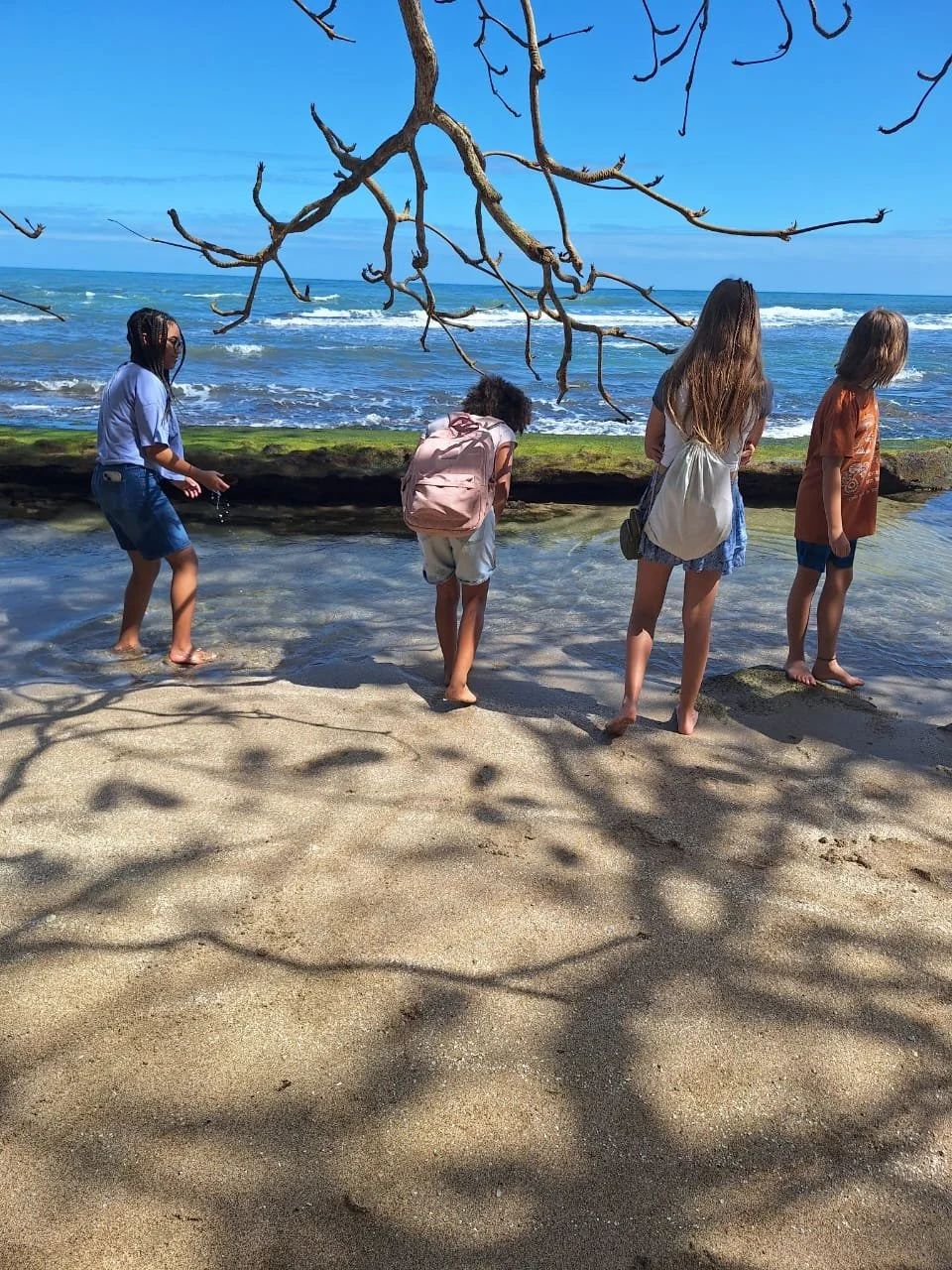
The Caribbean coast of Costa Rica — specifically the Talamanca region, stretching south from Puerto Viejo toward the Panamanian border — is something entirely different. It is less visited. Less polished. And for the families who find their way here, often the most significant thing they have ever done with their children.
We have lived here for twenty-two years. What follows is not a travel guide. It is an honest account of why this particular coast, at this particular juncture of culture and ecology and community, offers children something that cannot be manufactured elsewhere.
What is a worldschooling hub? (And why Cacao Coast Classroom is something different)
What is a worldschooling hub? (And why Cacao Coast Classroom is something different)
If you have spent any time in worldschooling circles, you have encountered the term. Worldschooling hub. It appears in directories, Facebook groups, Instagram captions, and family travel blogs. It is used to describe everything from a loose gathering on a beach in Bali to a structured three-week programme in Peru. It is worth slowing down and understanding what it actually means.
The term worldschooling hub has no governing body and no fixed definition. That is not a criticism — it reflects the nature of a movement that grew organically, from families making unconventional decisions and sharing what they found. But it does mean that when you search 'worldschooling hub' and compare results, you are not comparing like with like.
This post is an attempt to be genuinely useful to families in that position. We will explain what worldschooling hubs are, map the range of what exists, offer questions worth asking any programme, and be honest about where Cacao Coast Classroom sits in relation to all of it — which is, in important ways, slightly outside the hub model altogether.
Cacao Coast Family Guide
This guide covers everything you need to know about our programmes